›“Request holiday next Friday”
WorkflowMissing fieldsCalendar
Small HR/admin teams · HR Lifecycle Operations Pack · Employee lifecycle workflows
Start free, run a 30-day trial of the HR Lifecycle Operations Pack for onboarding, offboarding, document collection, and certificate or training renewals. The HR module is the core module inside the pack; workflow, document, calendar, and communication building blocks support the employee lifecycle around it. Small HR/admin teams can start with one workflow and expand later.
Create an account to confirm whether checkout is required or your existing modules already satisfy the pack.
30-day trial on eligible paid plans
From $10/user/month. Final price calculated after login.
Free tier available. Eligible paid plans include a 30-day trial.
HR operations boundary
Robo Connector HR is not another payroll system, HR database, or ATS replacement. The HR Lifecycle Operations Pack coordinates onboarding, offboarding, document collection, certificate/training renewals, deadlines, approvals, and human review around the core HR module.
Public action search
Explore visible packs, integrations, workflows, blockers and install paths. Anonymous visitors get discovery only; execution starts after account, workspace and permission checks.
Type a natural command. Robo Meister resolves the relevant modules, workflows, context, missing fields, and safe next step for this solution.
Command Center examples describe module-, workflow-, and context-resolved actions. Execution depends on configured permissions, available data, and review gates.
Simple mental model
Robo Meister adds a controlled execution layer around existing business tools. Start with one workflow, prove the result, then expand through packages, apps, APIs, and marketplace channels.
Connect the existing system, document source, event, or API that starts the workflow.
Robo Meister controls owners, approvals, exceptions, evidence, and human review.
After one proven workflow, expand through packages, apps, APIs, marketplace, Store, or partner channels.
Workflow recommendation
Choose one employee lifecycle workflow to launch first: onboarding, offboarding, document collection, or certificate/training renewal.
The mapper is a helper only. You can still open pricing or request setup guidance without completing it.
Pain points
What changes with Robo Meister
The HR Lifecycle Operations Pack turns onboarding, offboarding, document requests, certificate/training renewals, and readiness checks into owned workflow steps around the core HR module.
Documents, QA certificates, requirements, and compliance evidence can be projected into one HR view: missing, pending review, valid, expiring, or expired.
Approvals, compliance checklists, offer/readiness gates, and sensitive people decisions remain visible and assigned to accountable reviewers.
Sample workspace / pilot preview
Intake lane
New requests arrive with source, priority, owner, and required context.
Review lane
Exceptions and approvals show the reviewer, evidence, and next action.
Handoff lane
Completed work moves with a concise audit trail and follow-up owner.
First three workflows
Create/select employee, request required documents, assign account/equipment/mentor tasks, validate training/certificates, approve readiness, and mark active.
Coordinate access removal, equipment return, final documents, archive evidence, exit meeting, and final approval.
When evidence is missing, assign a request, track reminders, collect uploads, review, approve, reject, or waive with an audit trail.
Detect expiring certificates or training requirements, assign renewal owners, collect updated evidence, review validity windows, and close the renewal workflow.
Concrete workflow examples
Candidate stage, owner, feedback status, and next action are visible.
Requisition or offer approvals route to named reviewers with evidence.
Managers receive structured requests and overdue feedback becomes an exception.
Employee documents, manager tasks, and calendar handoffs stay in one workflow.
What the pilot delivers
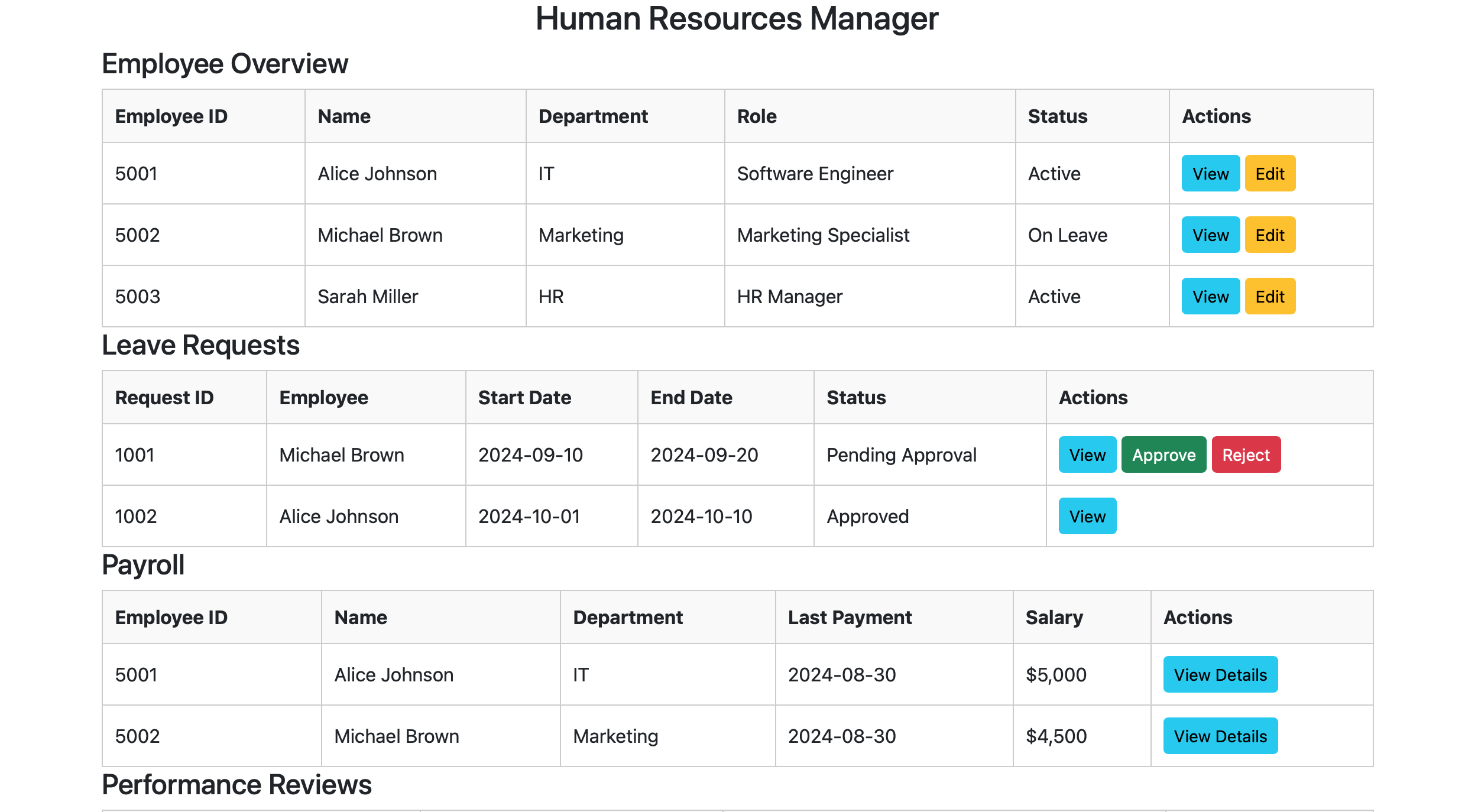
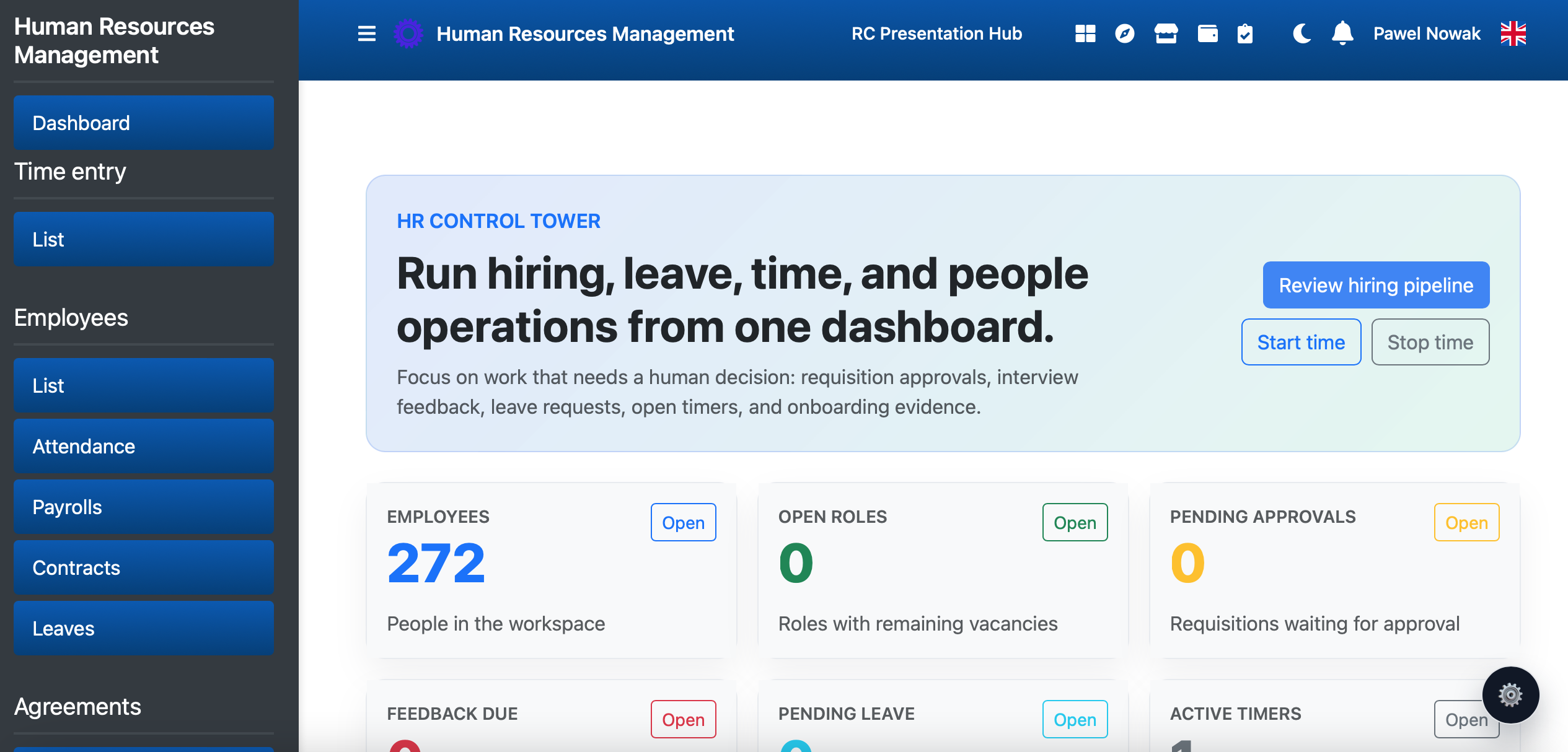
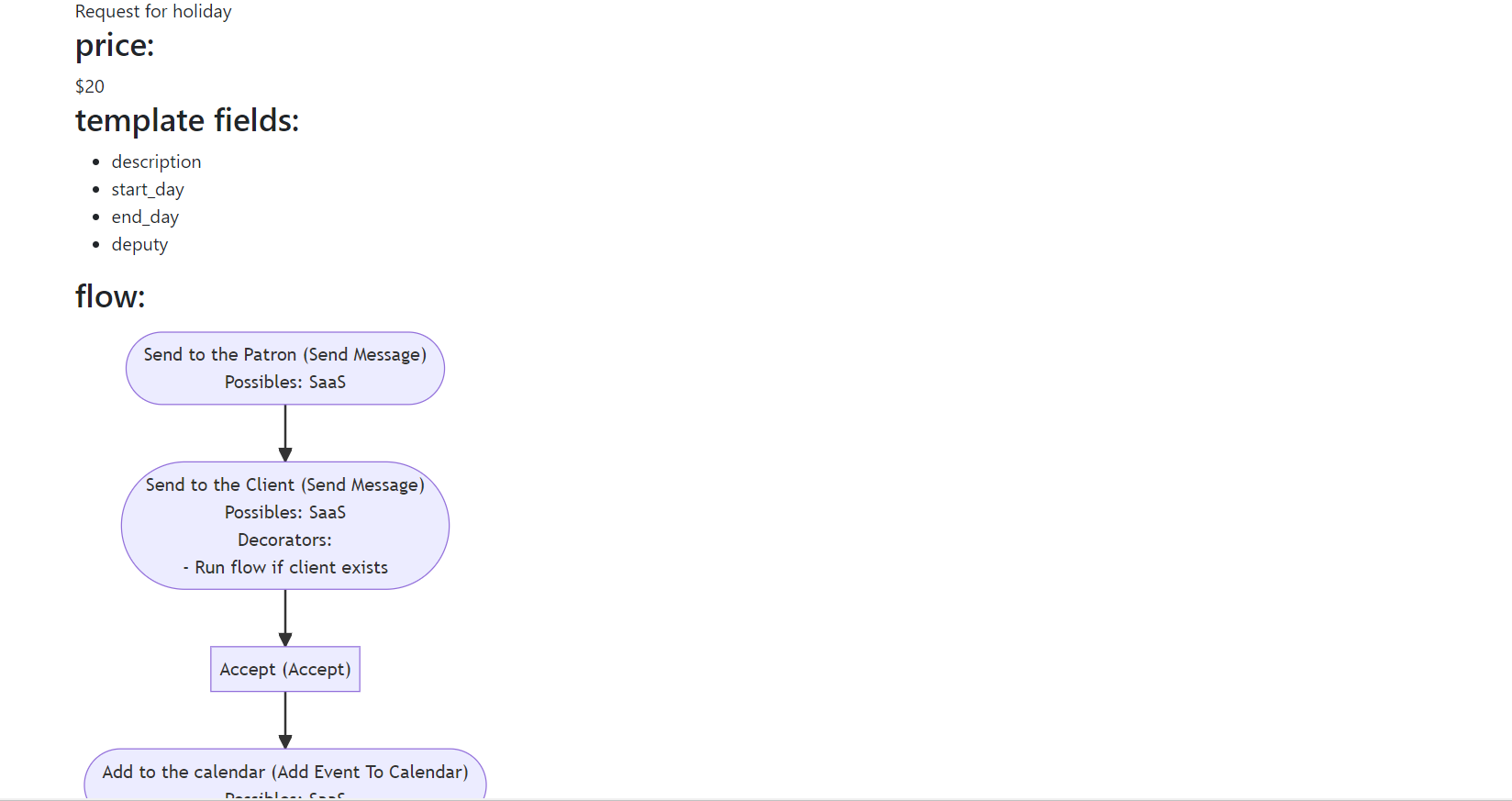
Product screenshots
These current product screenshots anchor the solution story in existing Robo Meister modules while the pilot maps the first workflow.
Recommended pilot workflow
Map one controlled HR Operations Workspace pilot, capture owners and evidence, and expand only after measured workflow proof.
Self-service pilot qualifier
This keeps the first step self-service. Use contact only for managed rollout, integrations, or dedicated pack scoping.
Works with current stack
Keep your current systems of record. Robo Meister starts as the workflow layer around the queue, documents, approvals, and handoffs that are currently scattered.
Before / after
Before: scattered messages, documents, approvals, and spreadsheet status checks.
After: one mapped workflow with accountable owners, visible exceptions, and a measured pilot outcome.
Best fit
Less ideal
FAQ
No. The first pilot maps one workflow around your current stack and identifies only the integrations needed for that workflow.
Bring one workflow, the people who touch it, where it stalls, and what outcome would prove the pilot worked.
Success is defined as a visible workflow map, a working pilot queue, and an agreed metric such as less chasing, faster review, or fewer missed handoffs.
Boundaries
Bring one employee lifecycle workflow for a controlled pilot: onboarding, offboarding, document collection, or certificate/training renewal.